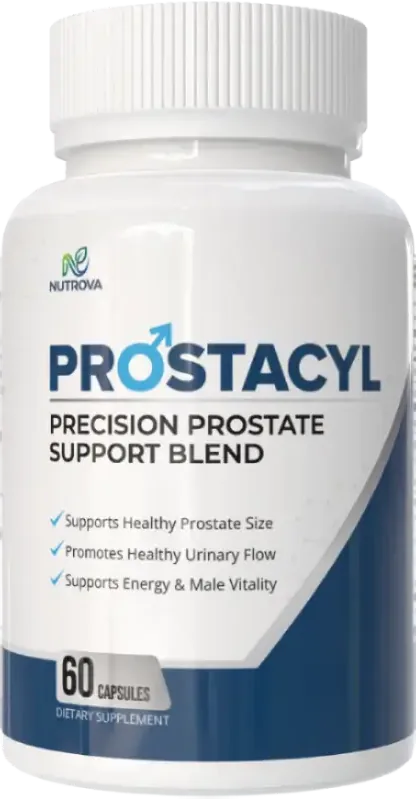
Saw palmetto and pygeum are the two biggest ingredients in Prostacyl, at 200 mg each. They are also two of the most talked-about herbs in men's health. Here is what the research shows — including the parts marketing pages tend to skip.
Saw palmetto: popular, but mixed results
Saw palmetto berry extract has been studied for decades. Early, smaller studies reported improvements in urinary symptoms. Later, larger trials with better controls — including studies funded by NIH — did not find it worked better than a placebo. A 2012 Cochrane review, which pooled many trials, reached the same conclusion for urinary symptoms linked to BPH.
That leaves saw palmetto in an odd spot: widely used, generally well tolerated, and not proven to change symptoms in rigorous studies.
Pygeum: encouraging but dated evidence
Pygeum bark extract has a smaller research base. A 2002 Cochrane review of 18 trials found a modest improvement in urinary symptoms compared with placebo. The authors noted that most studies were short and small, and that better trials were needed. Few large, modern trials have followed.
Why ingredient studies don't prove a product works
Studies test a specific extract, at a specific dose, in specific people. A product that uses the same herb may use a different extract, dose or combination. So even strong ingredient research would only tell you the ingredient is plausible — it would not prove that a finished product works. No published clinical trials on the finished Prostacyl formula were available when this was written.
How to read a label like a pro
- Look for amounts. Prostacyl lists every ingredient with a milligram amount. Proprietary blends that hide amounts make comparison impossible.
- Check the plant part. Nettle leaf and nettle root are studied for different things — see our nettle leaf page.
- Check standardization. Pygeum in Prostacyl is standardized to 3% phytosterols, a sign the maker aims for batch consistency.
- Add up vitamins. If you take a multivitamin, total your vitamin E and B6.
The bottom line
Saw palmetto and pygeum are reasonable, traditional ingredients with mixed or limited evidence. If you try a formula that contains them, do it with realistic expectations, alongside healthy habits and regular checkups — and use the guarantee window to decide whether it is worth continuing.
Important
This article is general information, not medical advice. Talk with your doctor about any urinary change, and before starting a supplement. Prostacyl is not intended to diagnose, treat, cure or prevent any disease.
Sources
- Saw Palmetto — Usefulness and SafetyNational Center for Complementary and Integrative Health (NCCIH)
- Serenoa repens for benign prostatic hyperplasia (Cochrane review, 2012)PubMed — review of randomized trials of saw palmetto
- Pygeum africanum for benign prostatic hyperplasia (Cochrane review, 2002)PubMed — review of older, mostly small trials