Botanical · fatty acids
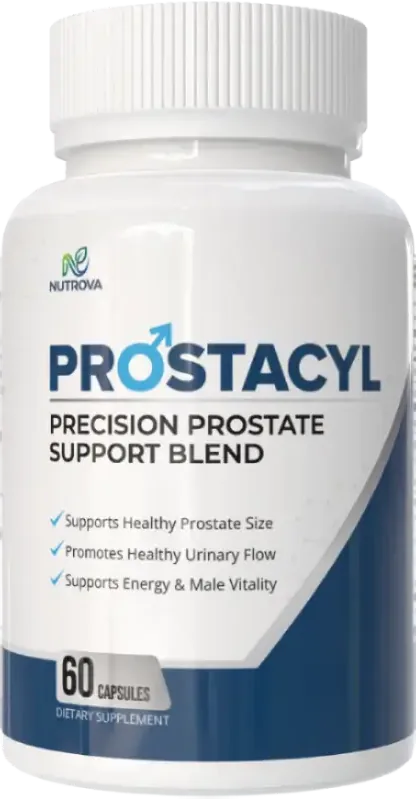
The berry of a small palm from the southeastern U.S. It is the herb most often found in men's prostate formulas, and it shares the top spot on the Prostacyl label.
Context: Widely studied. NIH notes that larger, well-run trials have not shown it works better than placebo for urinary symptoms.
Read the saw palmetto profile →
Botanical · phytosterols
Bark from the African cherry tree, standardized so that 3% of the extract is plant sterols. It is the second 200 mg ingredient on the label.
Context: Used for decades in Europe. A Cochrane review of older, small trials found modest effects but called the evidence limited.
Read the pygeum africanum profile →
Antioxidant · OPCs
A concentrated source of oligomeric proanthocyanidins (OPCs), plant compounds that act as antioxidants in the body.
Context: Studied mainly for circulation and antioxidant markers. There is little research on grape seed and the prostate specifically.
Read the grape seed extract profile →
Botanical · seed sterols
An extract from the seeds of butternut-type squash. Pumpkin seeds have a long folk history in men's and bladder wellness.
Context: Some small European studies used pumpkin seed oil or extracts for urinary comfort. Doses and forms vary a lot between studies.
Read the pumpkin seed extract profile →
Botanical · leaf extract
Stinging nettle is a leafy wild plant used in traditional herbal practice. Prostacyl uses the leaf, not the root.
Context: Most prostate-focused nettle studies use the root. Leaf research leans toward seasonal and joint comfort, so expect a supporting role.
Read the nettle leaf profile →
Antioxidant · carotenoid
The red carotenoid pigment in tomatoes. Prostacyl lists 10 mg of a tomato extract standardized to 5% lycopene.
Context: Diets rich in cooked tomatoes are often discussed in men's health. Food studies do not prove a supplement will have the same effect.
Read the lycopene profile →
Vitamin · antioxidant
A fat-soluble vitamin that helps protect cell membranes from oxidative damage. The label lists the synthetic dl-alpha form.
Context: 25 mg is well under the adult upper limit. Very high-dose vitamin E studies have not supported extra benefit for men's prostate health.
Read the Vitamin E profile →
Vitamin · energy metabolism
A water-soluble vitamin used in more than 100 enzyme reactions, many of them tied to protein metabolism and normal energy.
Context: 13.8 mg is high compared with the 1.7 mg Daily Value but well below the 100 mg adult upper limit.
Read the Vitamin B6 profile →
Trace mineral
A trace mineral found in fruit, nuts and vegetables. It is involved in how the body uses other minerals and some hormones.
Context: Typical diets provide about 1–1.5 mg a day. The adult upper limit is 20 mg, so 10 mg is a meaningful amount.
Read the boron profile →