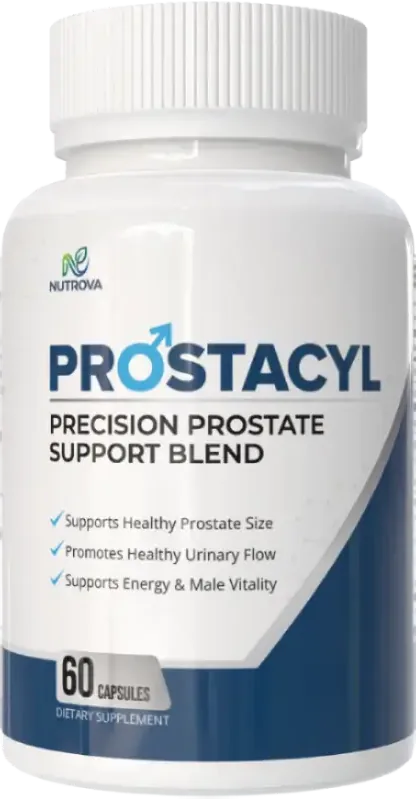
Exactly as listed on the label: Pygeum africanum Extract — bark (std. to 3% phytosterols) — 200 mg.
What it is
Pygeum comes from the bark of Prunus africana, an evergreen tree that grows in the mountains of central and southern Africa. The Prostacyl label lists 200 mg of bark extract standardized to 3% phytosterols. Standardization means the maker aims for a set level of a marker compound in every batch, which helps with consistency.
Why formulas include it
Pygeum bark contains plant sterols, triterpenes and ferulic acid esters. Plant sterols are the same family of compounds found in saw palmetto and seeds, so pygeum strengthens the sterol side of the formula.
What the research says — honestly
A Cochrane review from 2002 pooled 18 trials and reported that pygeum gave a modest improvement in urinary symptoms compared with placebo. The review also pointed out that most of those studies were small, short and used different extracts and doses. Newer, larger trials are scarce. Treat pygeum as a traditional ingredient with some encouraging but limited data, not as a proven fix.
Safety notes
Side effects reported in studies were mild and mostly digestive. Because the tree is over-harvested in some regions, sourcing matters; the label does not state the source, so ask the seller if that is important to you.
Where it fits in Prostacyl
Pygeum Africanum is one of nine ingredients in each two-capsule serving of Prostacyl. It works alongside saw palmetto, grape seed extract, pumpkin seed extract, nettle leaf and the rest of the formula, rather than on its own. You can see how the groups connect on the ingredients overview.
Sources
- Pygeum africanum for benign prostatic hyperplasia (Cochrane review, 2002)PubMed — review of older, mostly small trials
- Prostate Enlargement (Benign Prostatic Hyperplasia)National Institute of Diabetes and Digestive and Kidney Diseases (NIDDK)